Independent Study Reveals:
Trelson Focus Room Significantly Boosts Student Focus and Classroom Calm
Backed by Cognitive Science Research from Lund University

At Trelson, we believe in research to understand and improve education.
That’s why we were delighted to have Lydia Shurafa Forsberg, an independent Master’s student from Lund University, study our tool for her Master’s thesis. Her research looked at how Focus Room helps reduce distractions and supports students’ ability to pay attention in class.
The study was done in four 8th-grade classes, with a total of 77 students. The results show (as the study was small in scale, we hope that more research will follow to confirm and build on these findings) Focus Room has clear potential to create a calmer, more focused learning environment. Below, we’ve summarized the study and its findings.
More Than Just a Tool: Fostering Essential Skills for Life
Focus Room is more than just a digital barrier; it’s a protective tool designed to create the optimal conditions for students to actively practice self-regulation, sustained attention, and motivation.
Think of Focus Room like training wheels for digital focus. It provides the stability and structured support students need to learn how to balance their attention and build independence in managing distractions, especially for younger learners whose prefrontal cortex is still developing. While students eventually need to manage distractions independently, Focus Room helps them develop these crucial lifelong learning skills.
* Focus room can only be used on chromebook
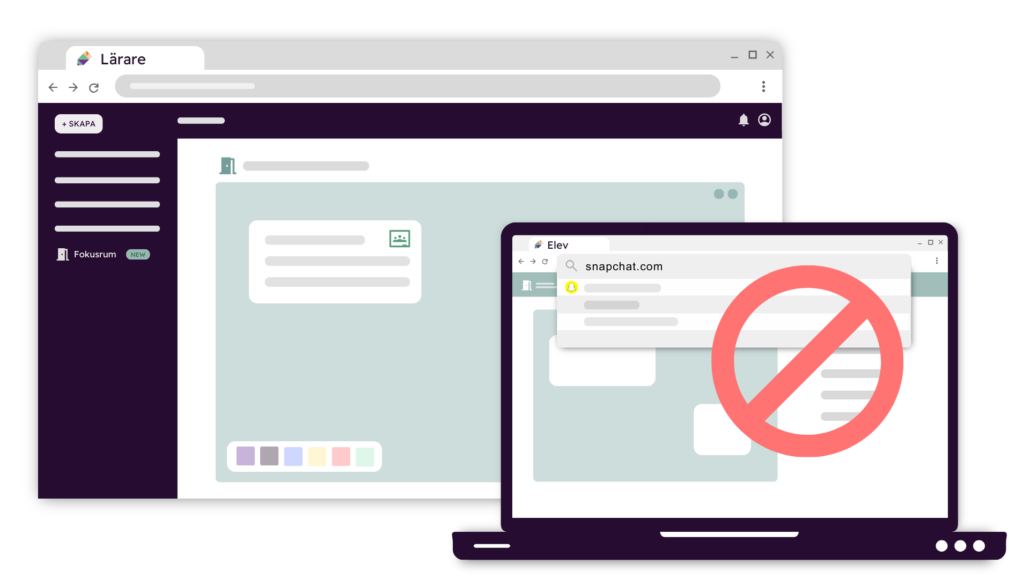
The Trelson study and its background research highlight that digital distractions take a real toll on students. These challenges stem from established psychological principles about how our brains deal with constant digital information:

The Myth of Multitasking:
The issue isn’t that students are naturally multitasking; it’s that the overwhelming number of digital distractions forces them to. Your brain can’t truly do two things at once (Ophir, Nass, & Wagner, 2009). Instead, it rapidly switches between tasks, like trying to study while checking social media. This constant switching is mentally tiring and leads to more mistakes, a principle backed by research on cognitive control.

The Cost of Interruption:
Every time a student gets a notification or clicks on a non-assigned tab, they lose more than just a moment. Research cited in the study (Mark et al., 2015) shows it can take up to 23 minutes to fully get back on task after a single short interruption. This isn’t just a brief pause; it’s a significant mental cost that eats away at valuable learning time.

The Marshmallow Dilemma:
The famous Marshmallow Experiment (Mischel & Ebbesen, 1970) teaches us about delayed gratification. Young brains are often wired for instant rewards, and in today’s digital world, these rewards (like games or social media) are just a click away. This makes it incredibly difficult for students to choose the long-term goal of learning over immediate entertainment.
The independent study clearly shows how Focus Room helps create a better learning environment and tackle the issues related to multi-tasking, interruptions and instant rewards. The following observations were made in the study:
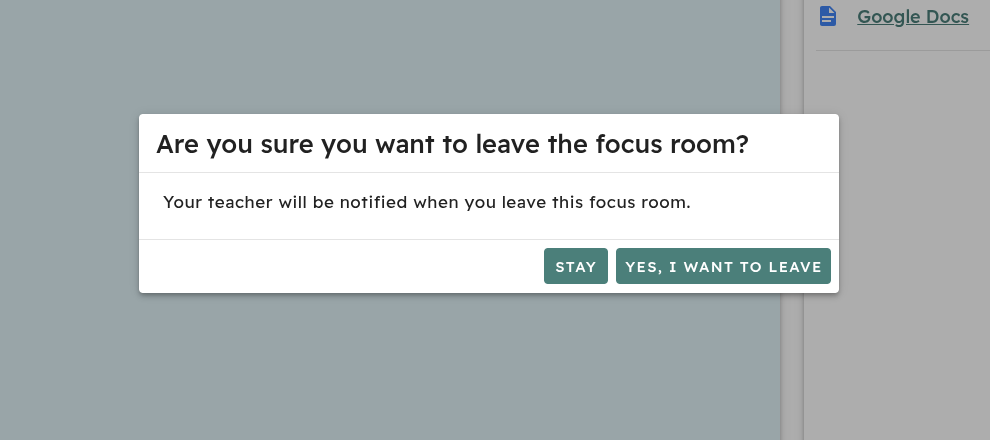
The study found that Focus Room created a calmer classroom. Researchers and teachers both observed this change. They specifically noted that when students saw a pop-up asking if they really wanted to leave their work, many chose to stay on task instead of getting distracted. This simple intervention helped students to stay focused on their assignments, which created a more peaceful atmosphere for everyone.
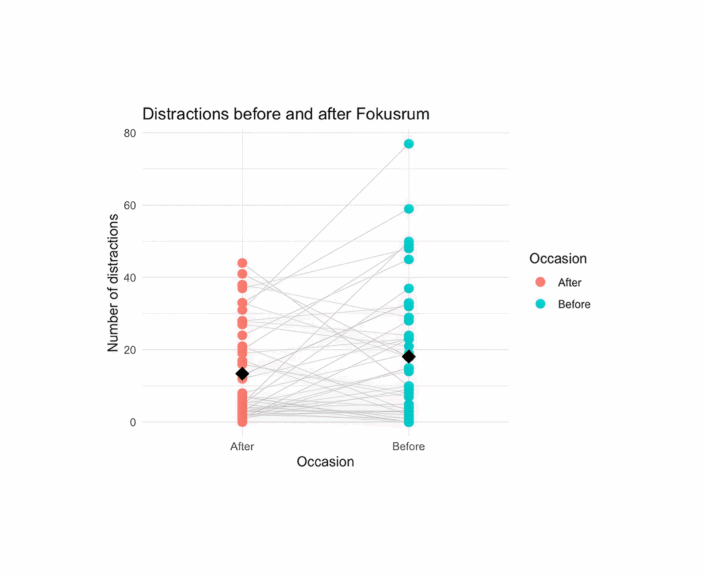
The study’s findings show that digital distractions are often contagious—if one student gets off track, others are likely to follow. However, with Focus Room, a significant shift was observed. On average, the classes using Focus Room had 4.71 fewer distractions per session than the control group. This tangible decrease meant a more productive and focused learning space for the whole class.
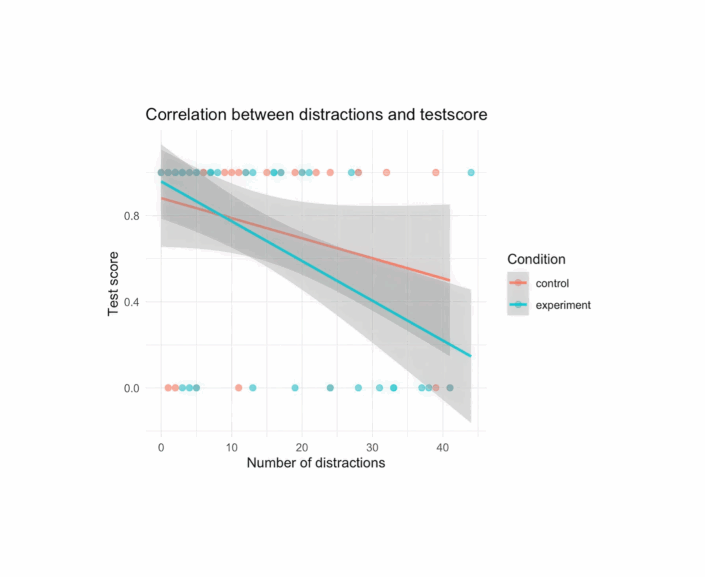
The research found a direct link between staying on task and performance. Distractions like games and unrelated websites decreases a student’s chance of getting a passing test score by 42%. Focus Room prevents this by only allowing access to the learning materials students need, directly supporting their ability to succeed. As one teacher noted, Focus Room “breaks students’ habit of switching between activities,” which helps students learn more deeply.

A key finding was that a small group of students caused most of the distractions. Focus Room helped the rest of the class stay on track, which freed up a teacher’s time to help the students who needed it most. This creates a positive chain reaction of calm and productivity for everyone.
Think of Focus Room as training wheels for digital focus. It gives students the stability and support they need to learn to manage their attention on their own.


While this initial study provides compelling evidence, we are committed to continuous improvement. We recognize that effective digital integration is an ongoing journey. Future research could explore longer-term usage, broader feature integration, and comparisons with other systems to further refine Focus Room’s impact.

We want to give a special thank you to Lydia Shurafa Forsberg and her supervisors, Betty Tärning and Eva-Maria Ternblad, from Lund University. In her independent Master’s thesis, Lydia took a close look at our Focus Room tool, and we are incredibly grateful for her rigorous work. The study provided us with a wealth of insights into the challenges of digital learning and the potential of tools like Focus Room to support students. This valuable research is helping us continue to develop effective solutions for teachers and students every day.